Profound Autism: Jack Clements
Key Takeaways
- Some people no longer see autism as being an identification of impairment, but this does a disservice to those who are severely impaired by their autism.
- 'Profound autism' need not include learning disability. Underlying autistic issues can create barriers to learning when the autistic individual otherwise shows signs of intelligence.
- It may well be possible that, by figuring out the issues that underpin the autism of a child, that we can better support them and predict outcomes.
- By creating autism profiles for profoundly affected autistic individuals, we hope to improve understanding of profound autism and how it relates to other forms of autism.
- A better understanding of 'profound autism' should help provide more targeted and individualised support for better outcomes.
The massive growth in autism diagnoses is resulting in changes to the narrative of what autism is. Some of these changes, regarding the way many would like autism to be framed, have led to the complication of people no longer seeing autism as being an identification of impairment. Much of that will be due to the desire for it not to be seen as a tragedy.
Unfortunately, those with more severe forms of autism are not being included in this. There seems to be much less understanding of what ‘profound autism’ is and why those affected are so severely disabled by their autism. The common explanation that it is simply autism plus learning disability, to us, does not seem like an adequate explanation. Leo Kanner, in his 1943 paper, believed that the children he described were intelligent, yet few had good outcomes in terms of being able to live independently and obtain employment.
We feel that this needs a thorough exploration. One way to explore this is to try to create autism profiles for some people who have no or limited functional speech and who cannot live independently. Is it possible, then, by figuring out the issues that underpin the autism of a child that we can better support them and better predict outcomes?
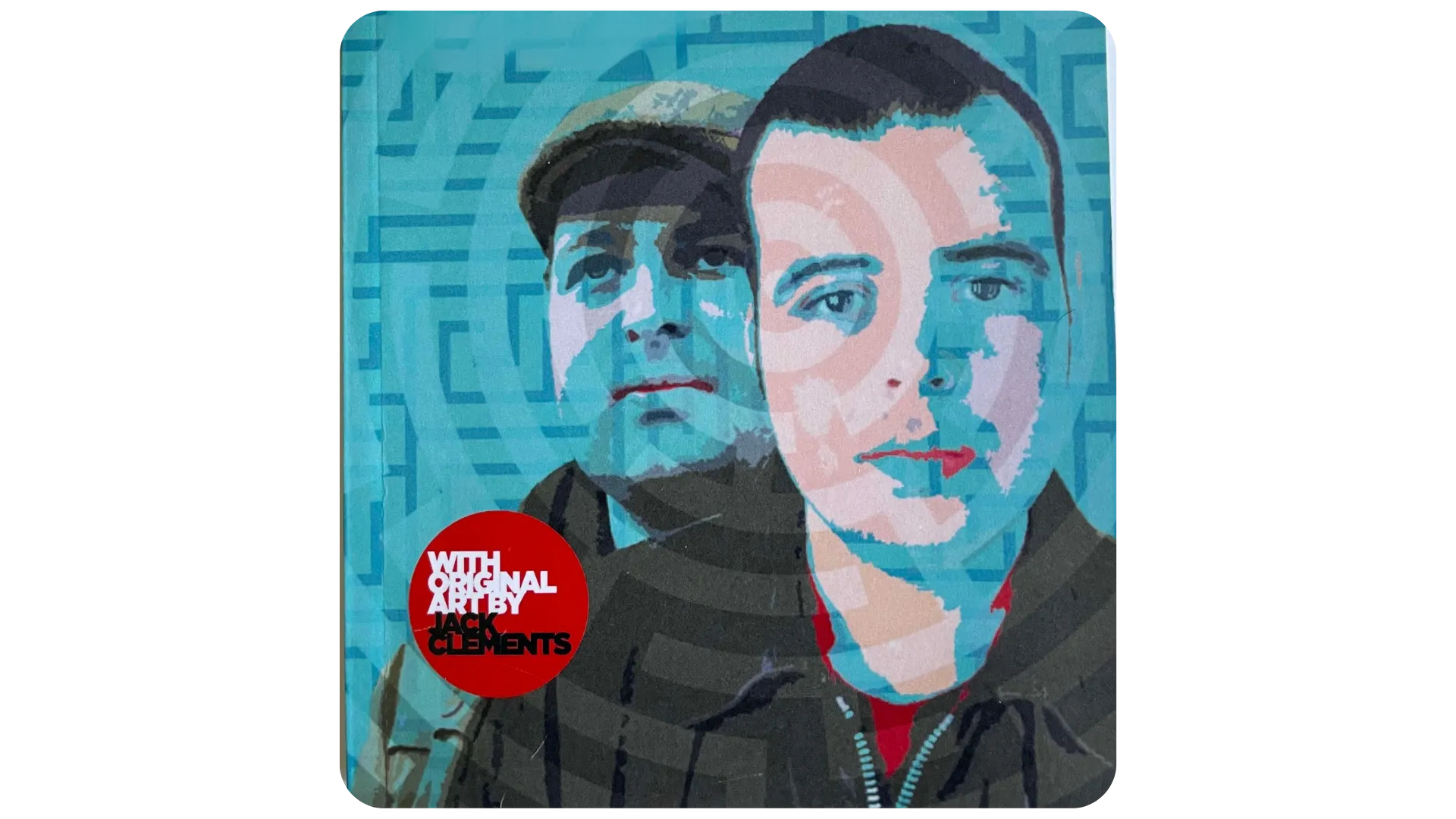
The aim of this article is to explore the autism of Jack Clements and see if we can understand the cognition that is not only behind his difficulties but also his strengths. The data used to construct a draft autism profile for Jack comes exclusively from the book ‘The Autistic Brothers: Two Unconventional Paths to Adulthood’, written by Jack’s brother, Thomas Clements, and illustrated by Jack. No attempt has been made to contact Jack’s family for further information. Therefore, this profile should be treated as a draft rather than definitive. There will be some uncertainties and errors regarding the profile because the information in the book is not as detailed as would normally be required for an autism profile.
Jack Clements is profoundly autistic and unable to live independently. At the time his brother, Thomas, wrote the book, Jack lived with his parents and attended a college during the week, which specialised in the care and education of people with complex learning needs. Thomas lived not far away and visited every fortnight, when he’d take Jack out for a meal, a coffee, and sometimes a film. Jack and Thomas have a strong bond. They don’t communicate via conversation but via looks. They understand each other and can communicate without words.
Jack has limited functional speech. He recalls and repeats whole dialogues from films, complete with the original intonation. He loves watching films and memorising the dialogues. These dialogues are repeated constantly. While he is able to communicate in a limited way, by means of his own words and phrases, Jack is not able to create whole sentences. Jack often communicates via a phrase or sentence from a remembered dialogue, which he repeats with the original intonation. The result can be appropriate, funny, or completely inappropriate. A spoken conversation with Jack is not possible.
Jack clearly loves his family. Sometimes he adapts his behaviour to please them - such as allowing his grandmother to kiss his hair (instead of his face) when she wants to show that kind of affection. Jack does add to the family dynamic in the way he contributes to conversations via remembered dialogues, often causing much hilarity, and how he demonstrates how he cares. He is a much loved and appreciated member of the family. It is not all bad.
Jack’s key underlying issues behind his autism appear to be:
Perceptual Memory for Sound enables Jack to easily memorise whole dialogues complete with the original intonation.
Gestalt sound. Jack wears headphones to shut out background noise. He is not hypersensitive to sound, though: he enjoys firework displays.
Inability to assemble words and phrases into sentences. Instead, Jack will often rely on phrases or sentences from a remembered dialogue to answer questions or make a comment. Jack does create his own phrases.
Gestalt vision, which means that Jack sees scenes more as ‘a whole’, rather than as individual parts. He does not separate foreground information from background information well. This is indicated by him insisting on everything being in its place (he fixes it if not). To him, if something is out of place, it will make the whole scene look ‘wrong’ or chaotic. For example, Jack rearranged the gnomes in someone’s garden (unbeknownst to them) into a ‘work of geometric beauty and precision’. Doing this will make a scene look less chaotic than if the gnomes are randomly placed.
Poor fine motor movements Although his balance and gross motor movements seem fine (Jack mastered inline skating very quickly, with no instruction), his drawing and writing is like that of a young child.
Other sensory issues with touch and taste. Jack has a limited diet and is averse to trying new foods. Jack hates being touched by people, although he does touch other people. If someone accidentally touches him, he taps them.
In addition, Jack may be hypersensitive to unpredictable movement in his visual field, which may be a consequence of his gestalt vision. This may be why he appears to not like animals like cats and dogs, whose behaviour is unpredictable. He does, however, like feeding rabbits, who are safely in their cages and, at least, when being fed, predictable. It might also explain why he likes trains, which move on predictable tracks. However, more evidence is needed to confirm this.
Jack clearly does have empathy for those around him. He will try to comfort his mother when she is upset and he has a very strong bond with Thomas.
Jack’s sensory issues, especially with vision and sound, explain why he needs a strict routine. Gestalt vision and sound make working out what is going on around him, very difficult. A strict routine makes his life predictable, more understandable, and less chaotic. He gets agitated when his weekly routine changes, such as during Bank Holidays when his normal activities are on a break. Even Thomas taking Jack out has a high level of predictability about it - including acting out a specific dialogue together several times. These sensory issues also explain Thomas’ comments about Jack’s innocence and childlike qualities. Jack is completely lacking in guile.
Jack constantly repeats whole dialogues. Sometimes the same one over and over again; sometimes his favourite ones in sequence. These seems to depend on the circumstances. When he is happy and relaxed, it is a sequence of dialogues. When anxious, he repeats the same one over and over again. Repeating these dialogues, along with flapping and/or rocking, is how Jack copes with a world that is, to him, incomprehensible. A world that he cannot understand because, to him, it is too unpredictable and chaotic.
Remembered dialogues are predictable and insert an element of predictability into his life. However, he clearly loves repeating dialogues because he does this when he is happy in an environment that is predictable - such as watching trains from a railway bridge with his brother, Thomas, when nobody else is around.
Jack does have a coping strategy: pattern matching. During a conversation, he will say something from a dialogue, depending on the context. It appears that he is trying to match the context of a remembered dialogue with what he can process from what people are saying. The result is sometimes appropriate and charming, but often funny. Sometimes it is inappropriate, and occasionally, especially when strangers are involved, embarrassing. Thomas remarks that Jack has a knack of saying something that reflects what everyone else is thinking but not saying and that this often resolves tension.
This pattern matching ability may apply to other skills as well. Thomas remarks on Jack’s dress sense. He always looks smart and well groomed and appreciates nice clothes (unlike Thomas).
Jack can learn, and demonstrates a reasonable level of intelligence in the ways he interacts with his family. However, he is severely hampered on the learning front by his autistic difficulties of working out what is going on around him, caused by gestalt vision and sound. Much repetition is required, although if you present it as a pattern, Jack might find learning new skills easier.
Jack has profound autism. While it might appear that Jack has severe learning difficulties, if you look deeper, it is aspects of his autism that are causing barriers to learning and Jack shows signs of being quite intelligent in the way he interacts with his family. He has created strategies for himself.
The information in the book is not as complete as I would like. To firm up a few things and gain more information, I would ask questions such as
- What does Jack like doing, and what did he like doing as a child?
- What is Jack good at? What is he able to do?
- What places does Jack like best?
- How was he to take on holiday (the book mentions holidays to Italy)?
- What does he do at college? Is there anything he particularly likes and anything he likes less?
- Are there any signs of using senses (such as touch) to compensate?
I would also ask other questions to gain more information about what Jack says. The aim would be to gain some data on how Jack thinks and learns and to gain more insight into his difficulties with language.
We hope that through reading this you can begin to see how having a cognitive understanding of someone’s autism potentially enables those who support him to have a better understanding of WHY the person behaves the way they do. Through understanding these WHYs, it is easier to put in place strategies that can help them develop to be as independent as possible - bearing in mind that if difficulties are very severe, gains might be small.
To gain a better understanding of profound autism, it would be helpful to us if some parents would be prepared to share their stories with us in detail. If you would like to explore an autism profile for a child or adult with profound autism, get in touch with us here at Aspiedent via our handy contact form.